February 28, 2026
Defending Your Legacy: The Peyton Manning Effect by Roz Usheroff
While I am the first to admit that I am hardly what you would call a dyed in the wool football fan, one would have to be on another planet – perhaps even another galaxy – not to have gotten somewhat caught up in the hype that was this year’s Super Bowl.
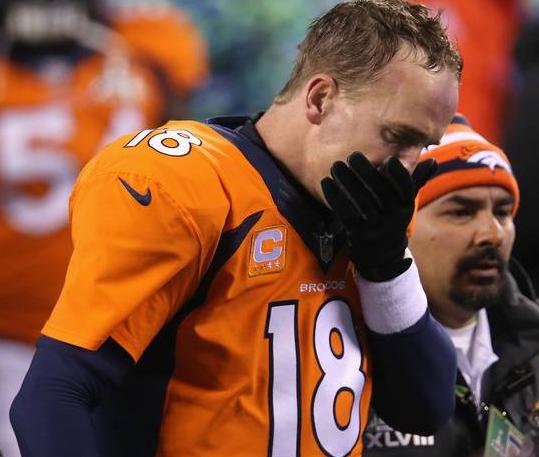
Even though I usually write about the most interesting ads that are run during football’s game of games, I was drawn more to the lengthy and at times monotonous debates surrounding Denver quarterback Peyton Manning’s legacy. Specifically the sharp contrasts between how this one game would forever define his long and illustrious career.
Even before the final seconds of the game in which the Seattle team utterly and completely decimated the Manning-led Broncos had ticked off the clock, one question that repeatedly crossed my mind was this; do people define you by your failures or your successes.
I know, on the surface it seems like an easy answer, almost perfunctory question. After all, when you win you are elevated to the upper echelons of fan adoration. When you lose . . . well let’s just say it is a place that few of us want to visit let alone experience on a personal level.
Even though losing the biggest game of the year in such a ignominious manner does little to create the kind of legacy one would want associated with their name, does one game make or break Manning’s reputation? Is it even fair to confine his legacy to what amounts to 60 minutes out of 14,400 minutes (not including playoffs) of playing time over a 15 year career?
To some the answer is yes, followed by the explanation that if you can’t win the big one then you are just not that great of a quarterback. Others of course will point to the fact that it is a team game, and that while Manning is a big cog in what until this Sunday was the Bronco juggernaut offence, he alone does not win or lose games.
Regardless of what you think, one thing is certain . . . would we want our legacy to be cast based on a bad day at the office?
Turning this kind of scrutinizing lens on ourselves, I wonder if we would want to be judged by a single albeit critical failure or, by our years of successful service to either our company or our clients?
Do not get me wrong, as I am not writing a post that is designed to elicit empathetic acceptance of a less than stellar performance. What I am trying to say is that while failures have the power to overwrite everything we have accomplished to this point in time, failure also provides us with an opportunity to redefine ourselves.
In short, it is not what failure does to us but how we use it to build an even greater legacy. You simply have to look at former Bronco great John Elway’s career in which his teams not only lost 3 consecutive Super Bowls, but lost them in a similarly humiliating fashion to what occurred on the field this past Sunday.
Rather than give up and fade away into a what might have been history, Elway persevered and eventually led his team to consecutive Super Bowl victories. In the end, Elway used failure as a stepping stone to success and did not allow it or others to define him.
Even though it may be hard for the Broncos and their fans to see it now, what happened last night may prove to be the needed springboard to achieving a level of success that at the moment seems unfathomable. Or is it?
My question to you is this; how have you dealt with failure in the past?

Is Sunday’s disappointing loss a springboard for future success?
30